Iditarod Race Comparisons, Then and Now

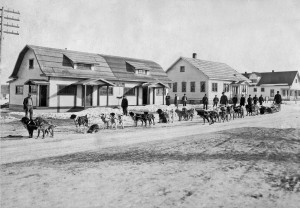
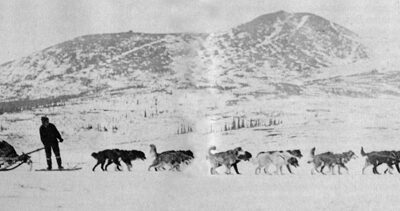
We Iditarod Sled Dog Race pioneers are often asked to contrast our trailblazing trip over the Iditarod Trail with those of today. Mind you, this particular discussion of the comparisons is not a commentary about which of the two era’s racers and races were of higher quality, but merely points to the differences. (To understand the true gist of this treatment, the reader must understand the dictionary definition of the word, adventure. Too many today use it where they should use the word, experience.)

Certainly, the degree to which a person setting forth to run today’s Iditarod Race considers it a matter of risk, hazard, danger, and an unknown outcome, depends upon the musher’s wilderness winter survival skills as well as his relative experience and preparedness with bush dog team travel. Almost every one of the 1973 entrees was a trailsman of years’ experience mushing off the beaten track, traveling and living out on long subarctic and arctic wilderness trails utterly alone, with no one keeping track of his whereabouts, watching over his safety, or providing his trail to run on or logistical support.

It is doubtful, highly doubtful, if the least racer of such experience back in 1973 would consider today’s races any part of an adventure by the word’s dictionary definition. A whale of a race, to be sure—much more of a pure race than in ’73—but hardly an adventure. While today a run over the well groomed and marked trail from one highly organized, superbly appointed checkpoint to the next would not constitute quite a “Nancy-visits-the-farm” level experience, to someone like a John Earl Komok who, since his youth, had traveling trails and frequented sea ice where death lurked one mistake away and survival skills put to a life-and-death test were commonplace occurrences—today’s races to a John Earl would be rather spoon-fed as an “adventure.”

Conversely, if one of today’s Iditarod racers were to step back into the 1973 run, he would probably feel frustrated trying to get a speedy race out of the dogs, feed, trail, equipment, and hardly existent logistical organization and support of that first event. But most modern racers would know they had landed smack dab in the middle of the wildest adventure of their lives. And many would be in far, far over their heads.

I dare say that a number within any average field of these modern races either would not have survived the 1973 race or would only have been saved by bailing out before getting caught in something far beyond their ability to live through.

We started the process, and now over four decades of selective breeding has produced a specialized Iditarod dog capable of performance we could have hardly dreamed possible. And to listen to the top racers of today is to listen to wondrous dog talk that goes so far beyond the knowledge of the pioneers it’s almost like a listening to a foreign language. Again, today’s contest is much more of a pure race.

I often explain to folk that this then-and-now contrast might be said to have a rough parallel in early NASCAR—with origins as a bunch of mountain boys, shade-tree mechanics, souping up their cars to (with their cargos of White Lightning and Mountain Dew) outrun the G-men, T-men and Revenuers—and today’s highly organized, corporate-backed, glitzy, nationally broadcast races.

Just as NASCAR’s drivers of an earlier era were not superior men, and their “event” was not “better” neither was yesterday’s Iditarod. It’s just that yesterday’s and today’s are vastly different. The two Iditarod eras required/require different levels of arctic trail and survival experience, different preparation, and different knowledge.

The first races—particularly the very first Iditarod Trail Race—were characterized more by a battle with the trail and elements and lack of organization and coped best and fastest won the race. Today, with the trail well marked and, in the inimitable words of Raymee Redington, “buffed like a danceroom floor,” with the checkpoints and the rest of the logistics superbly organized and working like well-oiled machines, with musher’s well-being out on the trail electronically and otherwise closely watched over, and with sometimes no need to even get one’s sleeping bag out of his sled for the duration of the race, today’s racers are free to just race. Now among top competitors, he who performs chores most efficiently, strategizes run-rest schedules and trail pace most perfectly, and has trained and tends to his dogs most carefully, wins the race.


Learn about Rod’s two-volume work,
TRAILBREAKERS, Pioneering Alaska’s Iditarod at
www.rodperry.com


One thought on “Iditarod Race Comparisons, Then and Now

  1. Wow Rod I am glad I found your blog….. Brings back days when I worked for Rick Swenson back in his hay days….. 81 thru 83… Still follow this race after all those years…Should have done it myself… Long story there..
    Keep up the writing you do a good job…

Leave a Reply