Nome—The Golden Key (part VI)

Of even the most avid fans of the Iditarod Trail Sled Dog Race, not many know that Nome was not always part of the race plan. In this series I’ve been telling how it happened that we have an Anchorage-to-Nome race. I strongly urge you, if you’ve just come aboard, to not begin here but go back to Part I and read it from the top. This series has been lifted from the much more complete telling in my definitive work, TRAILBREAKERS Pioneering Alaska’s Iditarod, Volume II (The Most Daring Iditarod Adventure of All Time, Founding The Last Great Race On Earth.)

By far the longest, most grueling race ever planned, to be run through one of the most majestic landscapes on the planet, over a gold-rush-era trail dripping with unparalleled history and romance, offering a purse of staggering proportions, featuring the most exciting, anticipation-charged start ever seen in the annals of sled dog racing—all of it was heading Nome’s way. With every other part of the race of such surpassing extravagance and grandiosity, the Iditarod Trail Committee understood that the event could not afford a ho-hum, anticlimactic letdown in Nome. No, the race needed to be superlative in every aspect, start to finish. Nothing less than a rousing reception and gala celebration at the end of the trail would do.

Joe Redington was the “doggiest” man on God’s green earth. Most planners would have approached Nome’s mayor. Or the city council. Maybe the Chamber of Commerce. Not Joe. As might have been predicted by anyone who knew him well, without a moment’s pondering, he straightway zeroed in on the town dog musher!

The original letter dated December 9, 1972, written in the low-key way and hand of Joe Redington has hung for decades in the music store owned by former Nome Mayor Leo Rasmussen and his wife Irna. The letter was sent to Howard Farley, a butcher by profession. Redington and Farley had once met briefly by phone a few years before when Farley had called to order salmon from the fish-processing operation Redington was running.

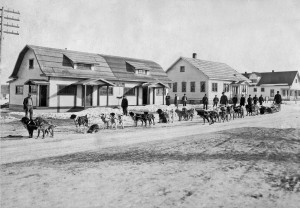
Howard and his beautiful wife Julie had long owned the sole dog team in Nome. They ran a side business giving demonstrations and rides to tourists. Now as Iditarod Race preparations were steaming ahead full force in Anchorage and the Wasilla area, the fact that Joe did not get around to such an important to-do task as informing Farley and letting Nome know they had a race heading their way until a little more than two and one-half months prior to the event speaks of the staggering amount of get-ready work that buried the founding team. Joe’s now-famous letter written on race stationery to inform Nome, ask for assistance and recruit Howard is headed and reads as follows:

[Notice that Joe does not ask Farley or Nome for opinions about Nome as a destination or permission to end there—that had already been cast in concrete in Anchorage ( take note of the letterhead)— but in so many words Joe tells them, “Our race is about to land in your lap; will you embrace it and help?”]

Iditarod Trail International Championship Sled Dog Race,
Anchorage to Nome, March 3, 1973. 1,000 miles——$50,000

Dec. 9, 1972

Dear Howard:

     I thought you might be interested in this race. I need some help on that end. Let me know if you are interested. Also I need to know how many teams will run such a race. I plan to enter and several others here in Knik plan it also. We have some teams already entered from the Lower Forty-eight. Can you get in touch with any of the nearby villages? Maybe radio. I would like to put you on our Iditarod Trail Committee. You could do a lot of good on the Nome end. Let me know how you feel about this as soon as you can.

So long for now,
Joe Sr.

Howard Farley was not merely the only one with a keen enough interest in sled dogs in Nome to keep a dog team, he just may have been the only one there who could have done what he accomplished.

The enthusiastic Farley pulled off a great sales job with Mayor Robert Renshaw and Nome’s City Council, Chamber of Commerce, Fire Department, and about everyone else who mattered and would listen. He instilled a mindset that the Iditarod would energize and benefit the town.

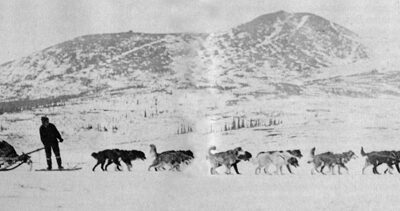
He also set about resurrecting the moribund Nome Kennel Club. The once prestigious body had, back in gold rush days, founded and staged the greatest sled dog races ever held, the famous All Alaska Sweepstakes. Its early members were responsible for introducing the Siberian husky breed to North America. Three on its rolls, including the immortal Leonard Seppala, arguably the greatest dog driver of all time, were heroes of the epic Serum Run.

Howard got the ball rolling to begin organizing the town to make sure there would be a run down Front Street and a finish line, as well as officials ready to greet drivers arriving day or night and record finishing times. He raised $1,200 for trophies and awards and made sure there would be an awards banquet following the finish.

After some six years of Iditarod Trail Race evolution and planning, the final three of which included planning for a long race, Howard Farley came into the picture at the last minute, relatively speaking, after all the important details had been decided. He faced nothing close to the monumental founding effort and opposition Joe and the others had undergone on the Anchorage end. However, he was in a strategic position at the far end of the trail to do more to solidify the Iditarod than any other individual on his side of the Alaska Range.

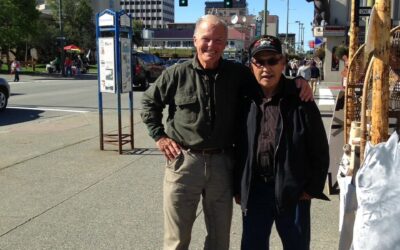
For Joe, Tom, and Gleo, and the Iditarod Trail Committee, with so much else to do, at least they didn’t have to worry about a single detail on the Bering Sea end. From Unalakleet to Nome, the Nome Kennel Club and the rest of the volunteer groups Howard had set in motion would handle it all. He and his able hands were quite a find. Howard Farley should be remembered as the man behind making Joe’s dream come true on the Bering Sea end of the Iditarod Trail Sled Dog Race.


Learn about Rod’s two-volume work,
TRAILBREAKERS, Pioneering Alaska’s Iditarod at
www.rodperry.com


Leave a Reply